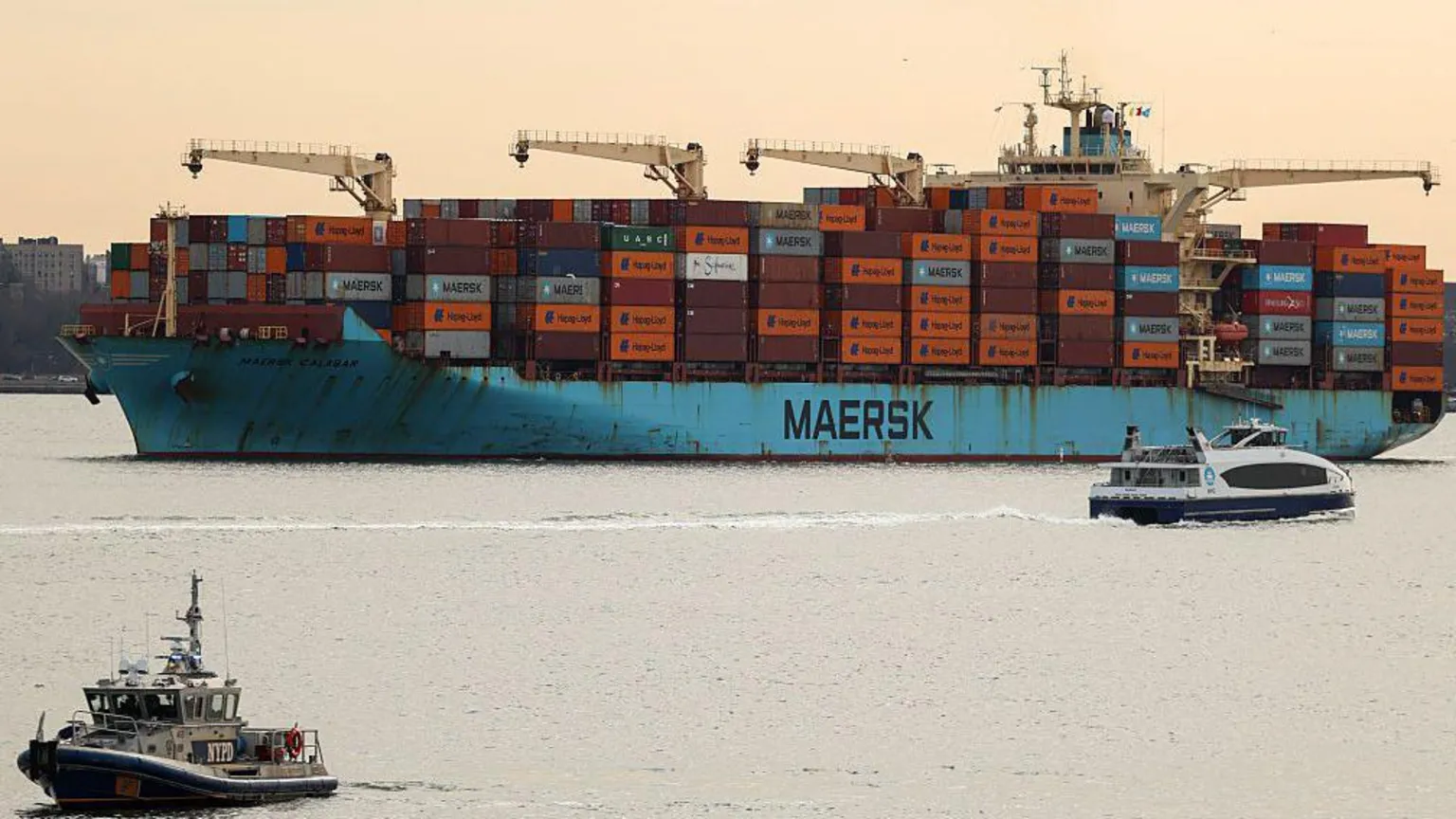
Global trade is facing a fresh shock as shipping costs rise due to escalating tensions in the Middle East. The warning comes from Vincent Clerc, the chief executive of Danish shipping giant Maersk, who says the ongoing Iran conflict is already driving up freight prices worldwide.
According to Clerc, the shipping industry operates under contract systems that automatically pass fuel fluctuations to customers. Therefore, when transport costs increase, companies eventually transfer those costs to consumers.
Maersk plays a crucial role in global commerce. Its container shipping division moves millions of goods across oceans every year. These shipments include toys, electronics, clothing, and household products that supply markets worldwide.
However, the conflict involving Iran, Israel, and the United States has severely disrupted two of the most important maritime trade corridors. As security threats grow, shipping companies must reroute vessels and spend more on fuel and protection.
Consequently, shipping costs rise across global supply chains and add new inflation pressure on everyday goods.
Shipping costs rise as vessels avoid conflict zones
Major shipping lines have started avoiding dangerous routes across the Middle East. Both the Strait of Hormuz and the Red Sea now present serious security risks for commercial vessels.
Because of these dangers, ships often travel around the Cape of Good Hope at the southern tip of Africa. This alternative route is far longer than the traditional passage through Middle Eastern waters.
The additional distance increases fuel consumption and extends delivery times. As a result, freight companies must charge more to cover operating expenses.
Clerc explained that even small increases in freight charges quickly ripple through global markets. Shipping costs affect everything from raw materials to finished consumer products.
Safety remains the industry’s biggest concern. Drone attacks and military activity have created conditions that make shipping routes extremely dangerous.
Without security guarantees, companies hesitate to send ships into high-risk areas.
Strait of Hormuz disruption threatens global trade
The Strait of Hormuz serves as one of the most strategic waterways on the planet. Before the conflict escalated, nearly one fifth of global oil shipments moved through this narrow passage.
However, Iranian threats to target shipping have forced many vessels to halt operations in the area.
The United Nations’ International Maritime Organization reports that at least seven seafarers have died since the conflict began. Several others have suffered injuries while working in the region.
IMO Secretary-General Arsenio Dominguez recently urged governments to protect maritime workers. He stressed that seafarers keep global energy and supply chains moving despite rising geopolitical tensions.
Iranian officials, however, argue that the country must use every available strategic resource during wartime. That position includes controlling the Strait of Hormuz.
Because of this standoff, global shipping routes now face unprecedented uncertainty.
Read Also
Oil Prices Surge Above $100
Diesel Prices Surge After Iran Conflict
Judge Blocks Kari Lake at USAGM
US Economy Shows Weak Signs as Retail Sales Stall
Shipping costs rise across global freight markets
Freight prices have already started climbing. Maersk estimates that transporting a standard 20-foot shipping container now costs roughly $200 more than before the conflict intensified.
This increase represents a 15% to 20% rise in some freight rates.
Other shipping giants have introduced similar price adjustments. MSC and Hapag-Lloyd have also raised charges because of the disruptions tied to the Iran conflict.
Meanwhile, China’s transport ministry has summoned executives from Maersk and other carriers to discuss the rising costs of international shipping.
Chinese officials reportedly want clarification on the sudden jump in freight rates during the crisis.
Despite those concerns, shipping companies say the increases reflect unavoidable operational expenses. Higher fuel prices, longer routes, and increased security measures all add pressure to shipping budgets.
Food supply chains face growing strain
The disruption has created serious challenges for regions that rely heavily on imported food. Clerc warned that supply chains in parts of the Middle East could experience shortages if the situation continues.
Ships carrying food cargo sometimes remain delayed in ports or offshore waiting zones. These delays risk damaging perishable goods and disrupting supermarket supplies.
Shipping companies have tried to maintain deliveries by using alternative transport methods. Trucks and land corridors now help move essential cargo between ports and inland markets.
However, land routes cannot handle the same volume as maritime shipping. Therefore, some industries must temporarily slow exports.
Petrochemicals and other bulk commodities may take a back seat while essential goods continue moving.
Diplomacy seen as the long-term solution
Western governments, including the United States and France, have suggested naval escorts to protect commercial ships. Military protection could allow vessels to pass safely through high-risk waters.
Clerc acknowledged that naval escorts could provide temporary relief for the shipping industry.
However, he believes a political agreement remains the only sustainable solution.
The Strait of Hormuz remains extremely narrow, and ships sail close to Iranian territory. This situation leaves little time to react if attacks occur.
Data from the logistics platform Seaexplorer shows that more than 130 vessels remain trapped inside the Persian Gulf as tensions continue.
Some ships have reportedly turned off tracking systems to hide their locations.
For global trade to recover fully, Clerc argues that governments must restore freedom of navigation in the region.
Until then, shipping costs rise and supply chains worldwide will continue to face significant disruption.