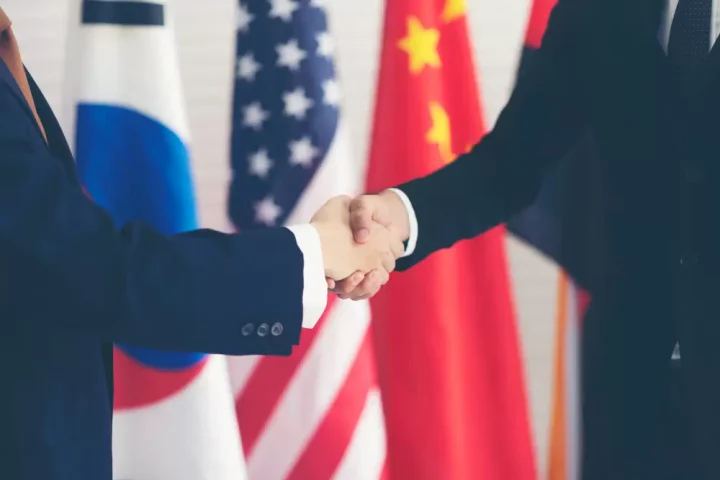
The European Parliament is planning to suspend approval of the US tariffs deal, which was agreed upon in July. Sources close to the international trade committee revealed that the suspension will be announced on Wednesday in Strasbourg, France.
This move would mark an escalation in the growing tensions between the US and Europe. These tensions flared up again after Donald Trump renewed his efforts to acquire Greenland, threatening new tariffs in response.
The standoff has rattled financial markets, reigniting fears of a trade war. On Tuesday, shares on both sides of the Atlantic fell. European stock markets saw their second day of losses, while in the US, the Dow Jones dropped 1.3%, the S&P 500 fell 1.5%, and the Nasdaq was down 1.7%.
Read Also
Global Disruption at Davos: Key Insights
China’s Growth Goal and Its Impact on Trade
Musk’s AI Chatbot Grok: A Game-Changer?
The dollar also fell sharply on the currency markets, while the euro rose 0.7% against the US dollar to $1.1731. The British pound also gained 0.2%, reaching $1.346.
This economic uncertainty comes after the US imposed new tariffs. The resulting financial turbulence prompted many to speculate about possible retaliation against the US, and whether the US would face a similar trade war that it had with China.
The US and Europe had earlier struck a deal at Trump’s Turnberry golf course in Scotland in July. This deal set US levies on European goods at 15%, down from the 30% tariffs Trump had initially threatened. In exchange, Europe agreed to invest in the US and adjust its regulations to boost US exports. However, the deal still requires European Parliament approval to be finalized.
But, following Trump’s recent threats over Greenland, Manfred Weber, a key German member of the European Parliament, stated, “Approval is not possible at this stage.”
The EU had previously suspended plans to retaliate with its own tariff package worth €93 billion ($109 billion). The EU’s response would have targeted American goods, but that reprieve ends on 6 February. If no agreement is reached or the deal is not approved, EU levies will be enforced starting 7 February.
French President Emmanuel Macron has urged the EU to consider its options for retaliation. He has suggested using the anti-coercion instrument, often referred to as a “trade bazooka,” to challenge US tariffs. Macron criticized Washington’s “endless accumulation” of tariffs, calling it “fundamentally unacceptable,” especially when used as leverage in territorial disputes like the Greenland issue.
The American Response
At the World Economic Forum in Davos, US Treasury Secretary Scott Bessent warned European leaders against retaliating. “I tell everyone, sit back, take a deep breath, and do not retaliate,” Bessent said. “The president will be here tomorrow, and he will get his message across.”
Commerce Secretary Howard Lutnick and US Trade Representative Jamieson Greer also threatened retaliation if Europe moved forward with measures. “When countries follow my advice, they tend to do okay. When they don’t, crazy things happen,” Greer warned.
The US has voiced frustration with Europe’s delayed approval of the deal, particularly as the two sides continue to disagree on issues like tech and metals tariffs.
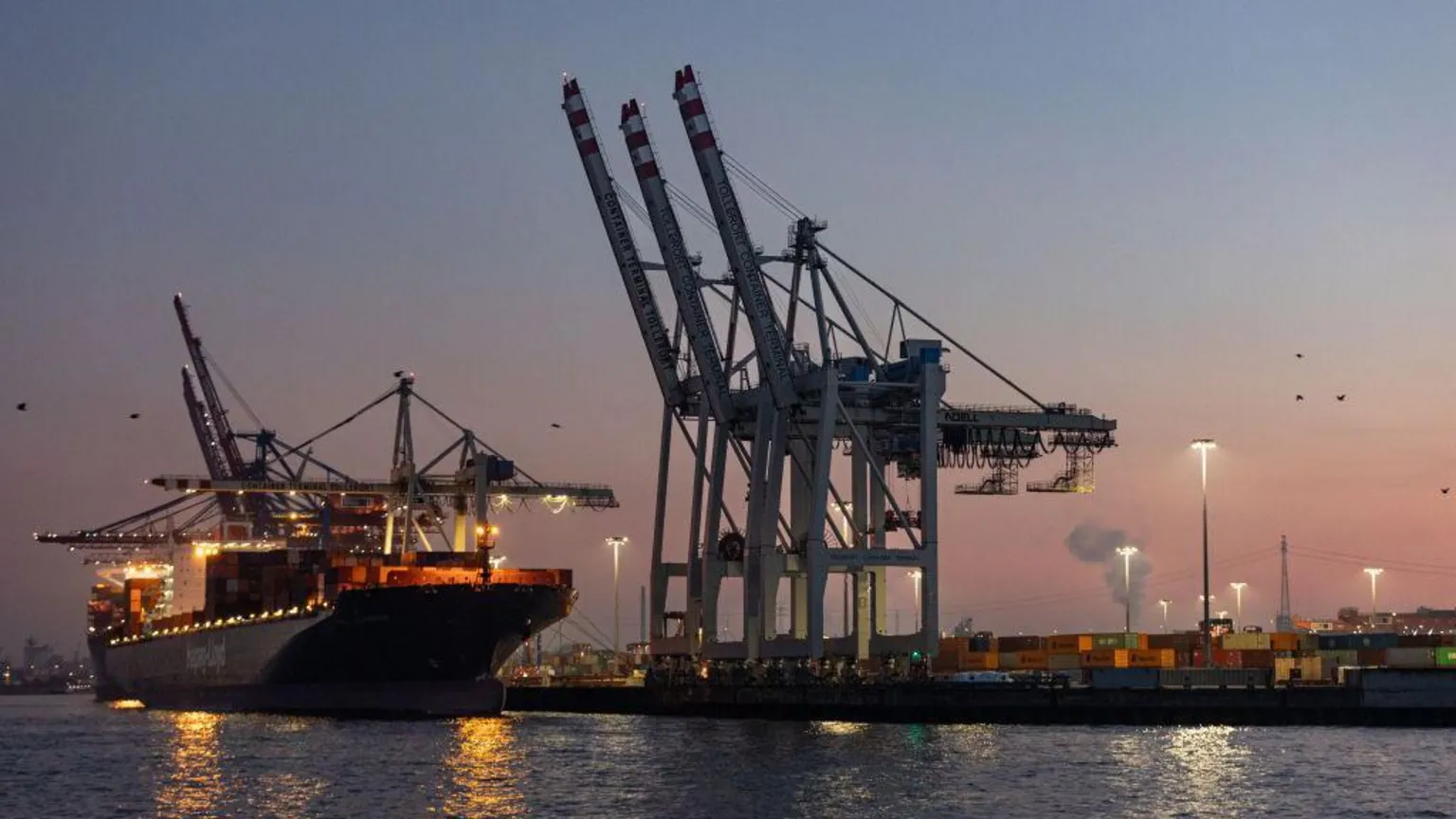
The US and the EU are each other’s largest trading partners, with over €1.6 trillion ($1.9 trillion) in goods and services exchanged in 2024. This represents nearly a third of global trade, making the stakes of any trade war between the two much higher.
When the US first announced tariffs last year, many leaders, including in Europe, threatened retaliation. However, most eventually opted for negotiations. Only China and Canada stuck to their threats, although Canada withdrew most of its retaliatory measures by September 2025, fearing damage to its own economy.
In his Davos speech on Tuesday, Canadian Prime Minister Mark Carney urged “middle powers” to unite and push back against the growing world of great power rivalry. “When we only negotiate bilaterally with a hegemon, we negotiate from weakness,” he said. “We must resist accepting subordination.”
Legal and Political Concerns
In the background of these tensions, the US faces a pending Supreme Court decision on whether many of the tariffs Trump imposed last year are legal. The outcome of this case could further complicate matters in the ongoing trade dispute.