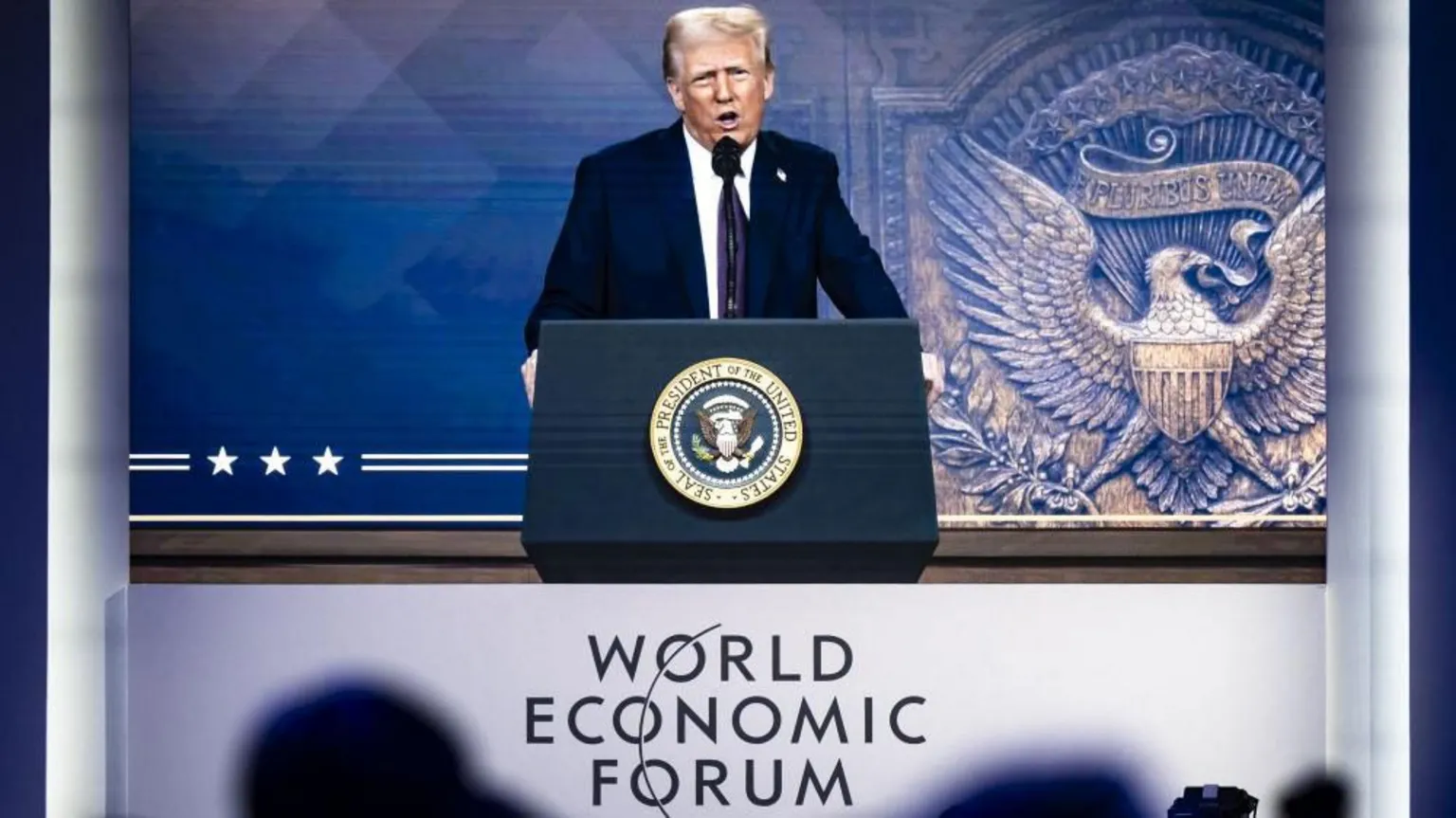
Davos Faces Global Disruption as world leaders, corporate executives, and policymakers gather in the Swiss Alps for the largest World Economic Forum ever. Beyond the snow and cold, the dominant theme this year is geopolitical uncertainty, driven by shifting power balances, trade tensions, and the return of US President Donald Trump to centre stage.
The timing of Trump’s appearance has amplified the sense of unease. His renewed focus on Greenland, borders, and tariffs has landed just as global elites convene. While Davos promotes dialogue and cooperation, the policies shaping this meeting point toward leverage, pressure, and disruption rather than consensus.
Davos Faces Global Disruption amid Trump’s return
Trump’s presence has reshaped the forum’s atmosphere. Last year, he addressed Davos remotely shortly after his inauguration, delivering blunt warnings to European executives. This time, he arrives in person, reinforcing a message that prioritises US manufacturing, tariff threats, and transactional diplomacy.
At the heart of Davos Faces Global Disruption is Trump’s willingness to challenge long-standing norms. His comments on Greenland and Canada unsettled allies, while his warning to companies was clear. Build factories in the United States or face tariffs that could reshape global supply chains.
A forum uneasy with confrontation
The official theme of the World Economic Forum stresses dialogue and cooperation. However, much of the current US approach clashes with the multilateral ethos Davos has long represented. For decades, the gathering symbolised globalisation, climate cooperation, and collective problem-solving.
That reputation makes Davos uncomfortable ground for Trump. Figures aligned with the MAGA movement often dismiss the forum as elitist and detached. Even so, Davos Faces Global Disruption now forces engagement, as decisions taken in Washington ripple across economies represented here.
Power politics take centre stage
Borders and sovereignty dominate discussions this year. From Greenland to eastern Europe, territorial disputes increasingly shape economic risk. With most G7 leaders attending, alongside Ukrainian President Volodymyr Zelensky, the forum risks becoming an informal crisis summit.
Some delegates quietly draw historical parallels. Moments of upheaval often push leaders into intense side discussions at global gatherings. In this sense, Davos Faces Global Disruption feels less like a conference and more like a geopolitical crossroads.
Read Also
Musk AI chatbot Grok
Early tax submissions
Doing business in Uganda
Uganda private sector outlook
Contrasting visions from North America
While Trump dominates attention, Canada presents a different narrative. Prime Minister Mark Carney arrives in Davos after navigating prolonged trade turbulence by diversifying partners and maintaining economic growth.
His message appeals to European leaders seeking predictability. Carney’s engagement with China reflects a commitment to multilateralism at a time when US policy appears increasingly transactional, reinforcing why Davos Faces Global Disruption resonates so strongly.
China positions itself as a steady force
China’s presence adds another layer to Davos Faces Global Disruption. Beijing has sent senior financial officials who present the country as a stable, long-term actor. As the world’s second-largest economy and leading car exporter, China projects confidence amid Western uncertainty.
This posture echoes previous Davos moments when disruptive trends first surfaced. From early discussions on quantum computing to last year’s focus on Chinese advances in artificial intelligence, the forum has often previewed shifts before they reach the mainstream.
Corporate power meets political uncertainty
More than 850 top executives have gathered, including leaders from major technology firms and industrial giants. Their presence highlights how corporate strategy now intersects directly with geopolitics.
For businesses, Davos Faces Global Disruption is not abstract. Tariffs, supply chains, and technology controls shape investment decisions every day. As governments assert more influence, companies must adapt quickly or risk falling behind.
Why Davos still commands attention
Critics often dismiss Davos as detached from reality. Yet history suggests otherwise. Many defining economic and technological trends first emerged in conversations here.
This year, the value of the forum lies less in consensus and more in exposure. Davos Faces Global Disruption ensures leaders confront uncomfortable realities, even without agreement. In that tension, the outlines of the future continue to emerge.