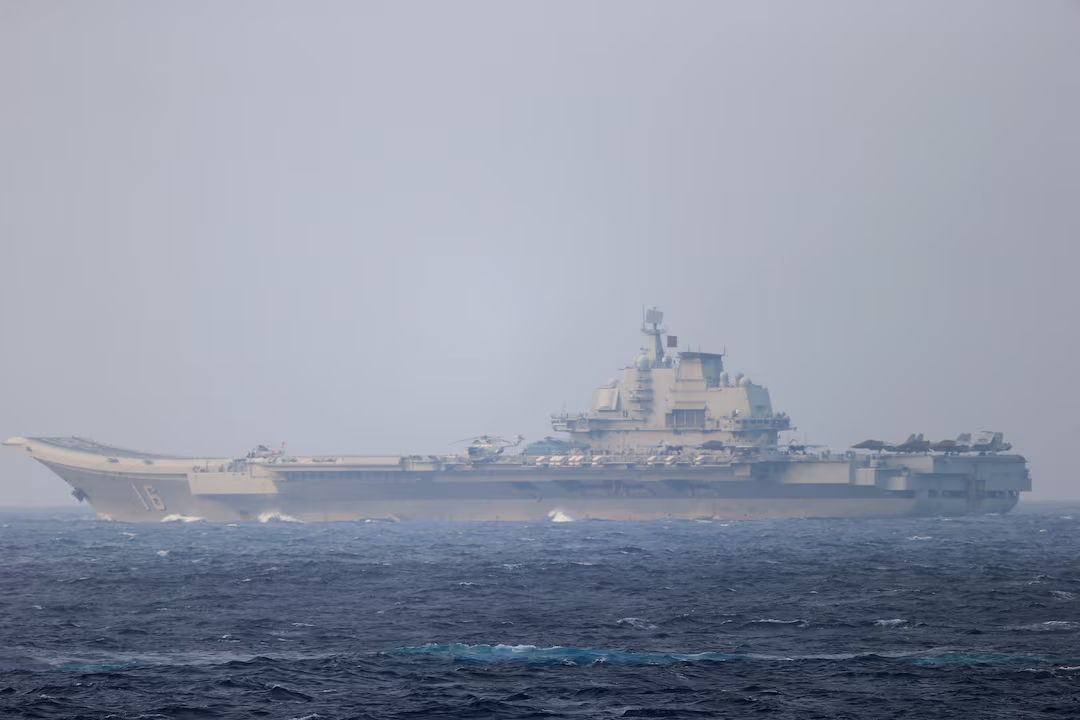
A China carrier group launched intense air operations near Japan over the weekend, sharply escalating tensions between the two neighbors. The move came amid a war of words over regional security and Taiwan, further straining already fragile diplomatic ties.
Japan’s Self-Defense Forces reported that China’s Liaoning aircraft carrier carried out about 100 take-offs and landings as it sailed east into the Pacific Ocean past the Okinawa Islands. The carrier operated with three missile destroyer escorts during the drills. Tokyo called the activity provocative and potentially dangerous.
In response, Japan summoned Chinese Ambassador Wu Jianghao on Sunday. Officials protested what they described as “dangerous and regrettable” behavior. They claimed Chinese fighter jets from the China carrier group aimed targeting radar at Japanese aircraft that had been monitoring the fleet. Such radar illumination often signals an imminent threat and can force pilots to take evasive maneuvers.
China’s embassy in Tokyo strongly denied the allegations. It accused Japanese planes of flying too close to the carrier group during its routine training, thereby “endangering flight safety.” A statement from the embassy urged Japan to “stop smearing and slandering” and to “strictly restrain its frontline actions” to avoid future clashes.
Japan’s Chief Cabinet Secretary, Minoru Kihara, rejected China’s version of events. At a press briefing, he insisted Japanese aircraft followed standard procedures and posed no risk. He added that Japan would “respond calmly but firmly” and keep tracking China carrier group movements near its waters.
The military activity follows sharp warnings from Japanese Prime Minister Sanae Takaichi last month. She stated that Tokyo could act if any Chinese military move against Taiwan threatened Japan’s own security. Taiwan lies just 110 kilometers (70 miles) from Japan’s southwestern Okinawa islands and was a Japanese colony until 1945.
Beijing reacted strongly to Takaichi’s remarks. It issued a travel advisory urging Chinese citizens not to visit Japan. It also halted progress on restarting seafood imports—a trade issue linked to Japan’s release of treated water from the Fukushima nuclear plant.
China considers Taiwan a breakaway province and has increased military pressure on the island in recent years. Taiwan’s government firmly rejects Beijing’s sovereignty claims and maintains its democratic self-rule.
Japan hosts the largest concentration of U.S. military forces overseas, especially in Okinawa. These troops form a key part of Washington’s Indo-Pacific strategy. While U.S. Ambassador to Japan George Glass has expressed support for Tokyo, the State Department did not comment on the radar incident. Former President Donald Trump, who plans to visit Beijing for trade talks next year, also remained silent on the matter.
As the China carrier group continues its operations in contested waters, regional stability remains on edge. Both sides show little sign of backing down. Analysts warn that repeated close encounters raise the risk of miscalculation—and possibly, unintended conflict.
READ: Binance Appoints Yi He as Co-CEO in Major Leadership Shift