The momentum behind Vietnam China trade continues to build as both sides move to deepen cooperation, attract new investment, and modernize cross-border connectivity. This week’s high-level conference between Vietnam’s Ministry of Industry and Trade (MoIT) and Guangxi leaders signaled a renewed push to unlock opportunities for businesses in both economies.
Vietnam China trade as a strategic pillar
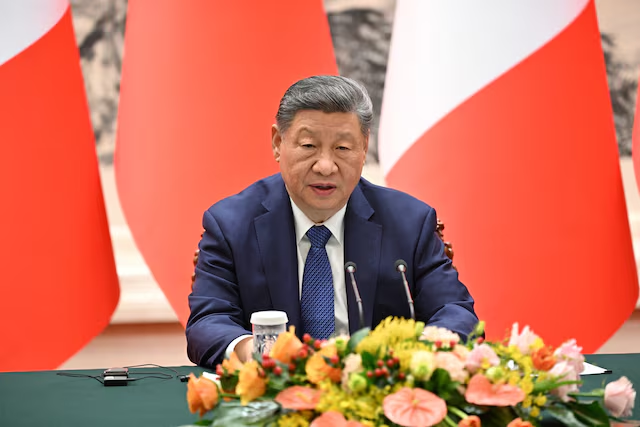
Speaking at the Vietnam–China (Guangxi) Trade and Investment Promotion Conference in Hà Nội, Minister Nguyễn Hồng Diên emphasized that Vietnam China trade remains one of the strongest pillars in the bilateral relationship. The long-standing ties have created growing demand for collaboration in high-tech industries, green development, and digital transformation.
Guangxi continues to play a special role as Vietnam’s closest economic gateway to southern China. For 25 straight years, Vietnam has been Guangxi’s largest trading partner. Vietnamese goods such as agricultural products, processed foods, and consumer items are widely distributed across the province.
Infrastructure expansion strengthens Vietnam China trade
Guangxi’s strong transport network, which includes road, rail, sea, river, and air links, makes it a vital hub for regional connectivity. Since 2019, MoIT and Guangxi authorities have coordinated on maintaining stable supply chains, even during the COVID-19 disruptions. Their cooperation ensured the smooth flow of goods at border checkpoints and supported the recovery of both economies.
Recent data highlights this momentum. In the first 10 months of 2025, two-way trade between Guangxi and Vietnam rose to 25.52 billion yuan, an 8.4% increase. Guangxi has also launched 34 container transport routes connected to Vietnamese ports, boosting logistics efficiency.
New opportunities for green growth and the digital economy
Both governments agreed that future Vietnam China trade growth will depend on innovation, technology, and sustainable development. Guangxi leaders called for deeper cooperation in AI, digital economy, smart logistics, and e-commerce, supporting the creation of a modern “digital corridor” between the two countries.
Plans for major cross-border infrastructure, including the Baise–Hà Nội expressway and future smart border gates, are expected to transform regional trade flows. This aligns with Vietnam’s commitment to improving its investment environment, simplifying administrative procedures, and protecting foreign investors.
A shared vision for long-term cooperation
More than 200 businesses from both sides attended the conference, signing new agreements on trade, industry, and investment. With strong political support and expanding commercial ties, the outlook for Vietnam China trade remains optimistic. Both countries are positioning themselves to build sustainable supply chains and seize new opportunities arising from ASEAN–China economic integration.