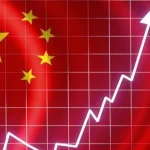
China growth target discussions dominated economic policy briefings in Beijing this week as senior officials signaled confidence that the country can sustain expansion despite rising global uncertainty. Authorities set the annual growth objective between 4.5 percent and 5 percent, a range they describe as both realistic and strategically flexible.
Officials argue the China growth target reflects structural momentum in the world’s second-largest economy. They say it also leaves room for policy adjustments as global trade tensions, geopolitical risks, and uneven domestic demand continue to shape the economic landscape.
During a policy briefing tied to the Government Work Report, senior policymakers emphasized that the growth range aligns with long-term national development plans that stretch toward 2035. At the same time, the target reflects cautious optimism about domestic reforms and evolving industrial capacity.
China growth target reflects reform momentum
Chinese policymakers say the China growth target balances ambition with stability. According to officials involved in drafting the Government Work Report, the range allows the government to maintain steady development while continuing structural reforms across key sectors.
Authorities note that economic planning now places stronger emphasis on quality rather than sheer expansion. This shift follows years of rapid development that transformed China into one of the most influential economic forces in the world.
Officials say reforms in manufacturing, digital technology, and clean energy are creating what policymakers describe as “new productive forces.” These emerging sectors aim to strengthen productivity while reducing reliance on traditional growth drivers such as real estate and infrastructure spending.
Furthermore, policymakers believe the growth target helps guide regional authorities. Local governments can adjust their own economic goals depending on local conditions, industrial capacity, and demographic realities.
This flexible approach allows national planners to encourage development while still maintaining economic discipline.
Policy tools supporting the China growth target
Chinese authorities also emphasized the role of macroeconomic policy in sustaining growth momentum. Policymakers signaled that fiscal and monetary measures will remain proactive in order to support investment, employment, and consumer demand.
Officials expect coordinated policy action to stimulate domestic consumption, which remains a central priority in economic planning. Leaders increasingly see internal demand as a stabilizing force as global trade conditions fluctuate.
Efforts to strengthen domestic demand include measures aimed at improving household income stability and expanding service-sector opportunities. At the same time, authorities want to prevent excessive competition among firms, a phenomenon some economists describe as involution-style competition.
Policymakers argue that moderating this dynamic will improve productivity and reduce inefficient capital allocation across industries.
Inflation targets also reflect cautious policy management. China set its consumer price index goal at roughly 2 percent, the same level used in the previous year. Officials say price stability remains important for sustaining economic confidence while protecting household purchasing power.
Global uncertainty shapes China growth target outlook
External conditions remain one of the most significant variables influencing the China growth target. Global supply chains continue to adjust following pandemic disruptions, geopolitical tensions, and shifting trade alliances.
As a result, policymakers in Beijing acknowledge that international markets remain volatile. However, officials say China’s economic structure has become more resilient over time.
Manufacturing upgrades, expanding technology sectors, and rising domestic consumption have helped diversify the country’s economic drivers. These developments reduce reliance on exports alone, even though foreign trade still plays a critical role in national output.
Economists also note that China’s infrastructure capacity, logistics networks, and industrial scale provide structural advantages that support long-term development.
Still, policymakers continue to monitor risks linked to property markets, financial leverage, and global demand cycles. These factors could influence the pace at which the China growth target is achieved.
Structural shifts strengthening China growth target
Behind the official growth projections lies a broader economic transition. Chinese policymakers increasingly frame growth not only as expansion in output but also as a transformation in productivity.
Investment in advanced manufacturing, artificial intelligence, electric vehicles, and renewable energy has accelerated in recent years. These sectors form part of a long-term strategy to shift China toward innovation-driven growth.
Meanwhile, government planners aim to improve financial regulation and risk management. Officials say these reforms will strengthen economic stability while supporting sustainable investment flows.
Labor market adjustments also play a role in the broader development strategy. Urbanization continues to reshape employment patterns as millions move into service industries and technology sectors.
Policy experts say these structural changes help reinforce the credibility of the China growth target because they create new sources of economic momentum.
China growth target aligns with long-term strategy
Officials repeatedly stress that the China growth target should be viewed within the context of broader national planning goals. China’s development blueprint through 2035 prioritizes technological independence, industrial modernization, and stronger domestic consumption.
This strategy reflects a shift away from earlier decades when rapid growth often relied on large infrastructure projects and export-driven manufacturing.
Today’s policy framework emphasizes resilience and efficiency instead. Authorities argue that steady growth within the 4.5 percent to 5 percent range can deliver meaningful economic expansion while avoiding overheating or excessive financial risk.
Moreover, the government sees reform as a key driver of future performance. Leaders believe that improvements in productivity, industrial innovation, and regulatory efficiency will gradually unlock new growth potential.
For now, policymakers remain confident that the China growth target remains achievable, even as the global economy enters a period of heightened uncertainty.