Uganda Billionaire Ranking 2026 places private capital at the center of a $65 billion frontier economy, underscoring how asset ownership now shapes national growth patterns. The latest Uganda Billionaire Ranking shows wealth concentration accelerating faster than the development of formal capital markets.
In a lower middle income market where public equity remains shallow, private fortunes have expanded through commercial real estate, petroleum distribution, manufacturing, hospitality and telecom equity stakes. As a result, asset control rather than stock ownership defines economic influence.
With nominal GDP estimated near $65 billion and per capita income around $1,070, Uganda presents a dual narrative. On one hand, services and construction continue to expand. On the other, household prosperity remains uneven. Against that backdrop, the combined estimated wealth of the top 15 private capital holders stands above $10 billion, roughly one sixth of national output.
Uganda Billionaire Ranking Highlights Asset Dominance
The Uganda Billionaire Ranking reveals that commercial property remains the single largest driver of private wealth. Prime land in Kampala’s central corridors commands premium valuations because tenant density and retail foot traffic remain strong.
Hamis Kiggundu leads the ranking with an estimated $1.35 billion. His wealth is anchored in high density commercial developments across Kampala. Through repeated reinvestment cycles, he has expanded into mixed use towers, industrial zones and fintech ventures. Strategic land banking strengthens long term valuation resilience.
Sudhir Ruparelia follows at roughly $1.2 billion. His diversified conglomerate model spans hospitality estates, commercial real estate, insurance and education. Hospitality assets such as Speke Resort Munyonyo generate operating revenue, while commercial property provides asset stability.
John Bosco Muwonge, valued above $850 million, represents a rent intensive CBD focused model. His holdings across Nabugabo, Luwum and William Streets benefit from high tenant turnover. Drake Lubega and Mansour Matovu also derive substantial value from dense inner city property portfolios.
Industrial Diversification Within Uganda Billionaire Ranking
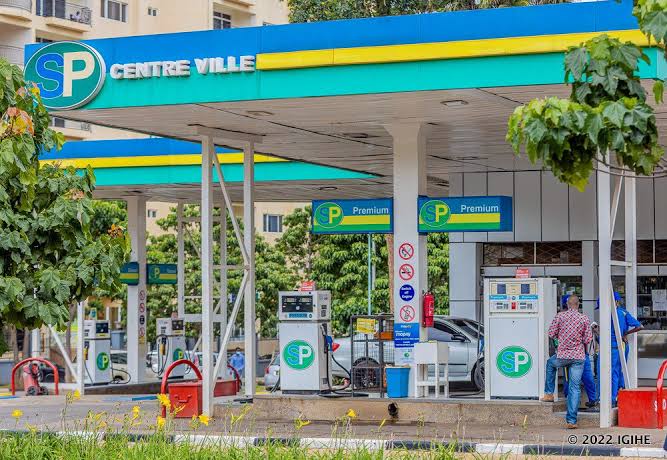
Although property dominates, the Uganda Billionaire Ranking also shows emerging industrial diversification. Karim Hirji’s Dembe Group blends hospitality with automotive distribution and finance. Meanwhile, Godfrey Kirumira anchors his capital in petroleum distribution before stabilizing returns through property and telecom infrastructure.
Charles Mbire stands apart because his wealth is equity driven. His stake in MTN Uganda ties valuation to dividends and telecom growth rather than rent yield. Equity exposure introduces market sensitivity but offers scalable upside as digital finance expands.
Amos Nzeyi’s fortune reflects manufacturing scale. As the exclusive Pepsi bottler, he depends on production output and consumer demand. Ahmed Omar Mandela similarly relies on vertically integrated distribution networks, including petroleum retail and milling operations.
Tom Kitandwe and Guster Lule Ntake combine land ownership with agribusiness and manufacturing. Their models illustrate how trade profits have historically transitioned into asset backed capital positions.
Real Estate Concentration and Urban Leverage
Christine Nabukeera and Haruna Sentongo reinforce the real estate concentration theme. Both rely on premium commercial and residential property in high growth corridors. Rental yield stability and land appreciation underpin their valuations.
Patrick Bitature represents a transition era entrepreneur. Telecom distribution formed his early capital base, while energy infrastructure and hospitality added diversification. His wealth model blends operational cash flow with infrastructure backed assets.
Across the Uganda Billionaire Ranking, land scarcity in Kampala remains a primary multiplier. Urban densification increases lease values. Consequently, location drives valuation more than financial engineering.
Macro Context Behind Uganda Billionaire Ranking
The Uganda Billionaire Ranking must be understood within macroeconomic realities. Capital markets remain limited in depth. Therefore, entrepreneurs have reinvested earnings into tangible assets rather than listed portfolios.
Because ownership of large scale property and distribution networks requires significant upfront capital, entry barriers remain high. This structure accelerates wealth compounding among early asset holders.
Furthermore, oil infrastructure development and digital finance expansion could reshape future rankings. If energy production scales successfully, new industrial capital may emerge. Likewise, telecom and fintech growth could shift valuation drivers toward technology enabled revenue streams.
However, for now, commercial real estate and petroleum distribution remain dominant. These sectors offer visible cash flow and collateralized asset backing, which reduce volatility compared to speculative equity exposure.
The aggregation of more than $10 billion among a small cohort of individuals signals structural capital concentration. Yet the ranking reflects asset mechanics rather than ideology. Ownership of income producing land and enterprise scale remain the decisive variables.
As Uganda advances toward industrialization and deeper financial markets, the architecture of private capital may gradually broaden. Until then, the Uganda Billionaire Ranking illustrates how tangible asset control continues to define economic power in a rapidly evolving frontier market.