New Agreement Expands Electric Vehicle Access and Canola Exports
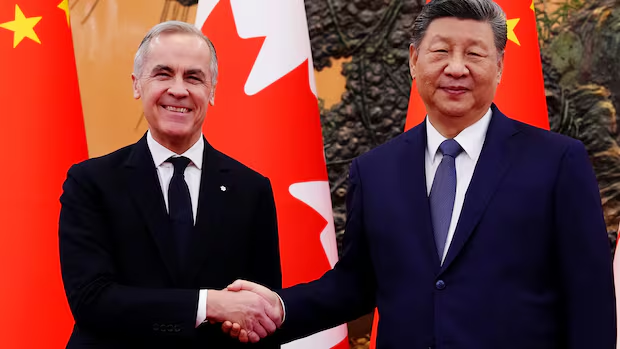
The Canada-China trade deal announced by Prime Minister Mark Carney marks a significant boost for British Columbia’s economy, expanding access to Chinese electric vehicles and creating new opportunities for canola exports. The agreement, concluded during Carney’s high-profile trade mission to Beijing, is expected to facilitate the import of up to 49,000 Chinese EVs per year at a tariff rate of 6.1 percent.
Industry leaders in B.C. have welcomed the deal, noting its potential to enhance competition, affordability, and market stability. The Vancouver Fraser Port Authority highlighted that these trade inroads signal Canada’s commitment to being open for business on a global scale, while an expanded auto terminal on Annacis Island is set to handle the increased volume efficiently. Vehicles under this deal are projected to retail at prices below $40,000, making EVs more accessible to Canadian consumers.
The New Car Dealers Association emphasized the importance of reviewing the full details to ensure long-term benefits for both consumers and the industry. Similarly, the B.C. Chamber of Commerce welcomed the agreement, noting that diversified trade partnerships beyond the United States are essential for economic growth and stability.
While the deal has been positively received, concerns remain regarding privacy standards and China’s human rights record. Nonetheless, Ottawa’s goal of expanding trade with key global partners underscores the strategic importance of China in Canada’s economic landscape.
Overall, the Canada-China trade deal represents a major step forward for B.C.’s auto and agricultural sectors, supporting economic diversification and providing certainty for businesses and consumers alike. The agreement highlights Canada’s commitment to balancing trade growth with regulatory oversight and long-term market stability.