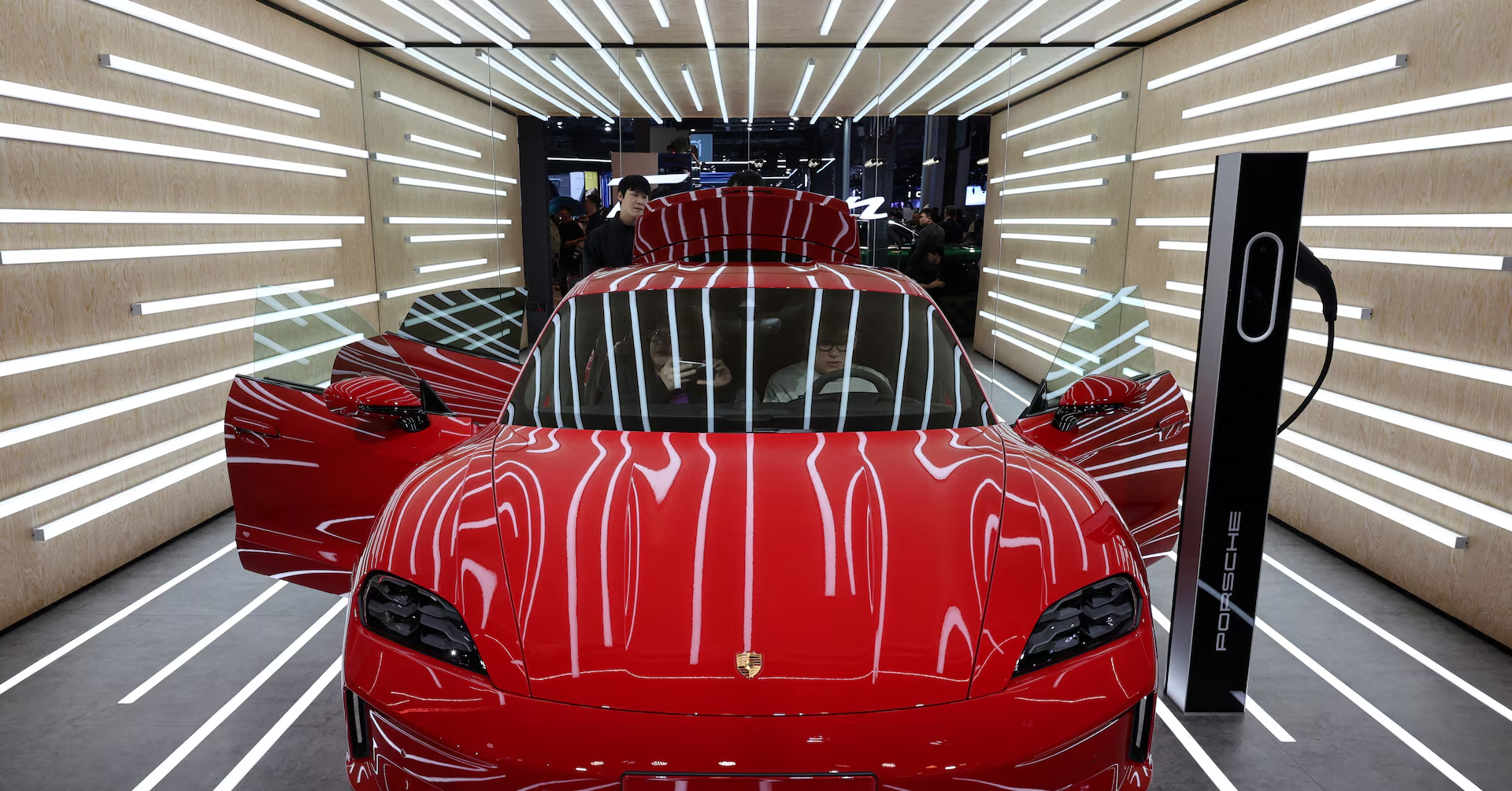
Porsche’s incoming CEO, Dr. Michael Leiters, will officially take charge on January 1, 2026, after Oliver Blume’s decade-long leadership. Leiters brings extensive experience from McLaren and Ferrari. Yet he faces formidable challenges: declining sales, particularly in China, and a faltering electric vehicle (EV) strategy.
Leadership Transition Amid Uncertainty
Oliver Blume’s dual role as CEO of Porsche and Volkswagen Group sparked concerns among investors and analysts. Under his leadership, Porsche’s stock price dropped by more than half since its 2022 IPO. In addition, the company posted a €611 million operating loss in the third quarter of 2025. Analysts attribute this downturn to declining Chinese sales, U.S. import tariffs, and costly delays in EV production.
In response, Porsche announced a restructuring plan that includes cutting 1,900 jobs by 2029. It will also shift focus back to combustion and hybrid engines, reversing its earlier EV emphasis. These moves highlight the urgency for decisive leadership and strategic direction.
Dr. Michael Leiters: A New Hope?
Dr. Michael Leiters, a German engineer with a strong background in luxury automotive brands, will lead Porsche through this challenging period. He previously served as CEO of McLaren and Chief Technology Officer at Ferrari. His experience equips him with the strategic vision and technical knowledge needed to navigate Porsche’s difficulties.
Leiters also worked at Porsche before, leading the development of the Macan and Cayenne model lines. His appointment is a strategic move to reinvigorate the brand and operations. Experts believe his expertise in high-performance vehicles and luxury market insight could restore Porsche’s competitive edge. However, success will depend on his ability to implement effective strategies and unite the organization under a shared vision.
Immediate Priorities for Leiters
Porsche’s pressing challenges require targeted solutions. Leiters’ immediate focus will likely include:
1. Revitalizing Sales in China
China remains Porsche’s largest market. The sales decline there represents a serious concern. Leiters must rebuild brand loyalty, restore consumer confidence, and counter competition from both European and local automakers.
2. Reassessing the EV Strategy
The shift back to combustion and hybrid engines shows Porsche’s need to reevaluate its electric mobility approach. Leiters must balance market demand with environmental regulations. He also needs to ensure Porsche remains competitive as other luxury brands expand their EV offerings.
3. Implementing Organizational Changes
The planned job cuts and restructuring will challenge internal morale. Leiters will need strong communication and leadership skills to maintain productivity and retain key talent during this period.
Opportunities Amid Challenges
Despite the obstacles, the situation presents opportunities for transformation. Porsche can leverage Leiters’ experience to rethink its strategy, strengthen its core offerings, and innovate in key markets. The company could also re-establish itself as a leader in performance vehicles while aligning with global trends toward sustainability and hybrid mobility.
By focusing on quality, technological innovation, and customer engagement, Leiters can position Porsche to regain market share in China, Europe, and the U.S. Moreover, he can enhance the brand’s reputation in the EV segment while maintaining the legacy of Porsche’s combustion and hybrid models.
Strategic Considerations for the Road Ahead
Analysts highlight several strategic areas for Leiters:
- Brand Reinvention: Porsche must reaffirm its luxury image while embracing new technologies. Marketing campaigns and product launches should reflect a balance of tradition and innovation.
- Global Market Stability: Leiters will need to address trade barriers, currency fluctuations, and geopolitical risks, especially in China and the U.S.
- EV Market Timing: Competitors such as Tesla, Mercedes, and BMW are advancing rapidly in EVs. Porsche must avoid losing momentum while catching up in technology and production.
- Operational Efficiency: Restructuring should improve profitability without damaging employee morale. Streamlined operations can free resources for R&D and market expansion.
Risks and Challenges
Leiters will face several hurdles beyond sales and restructuring. First, global economic uncertainty may affect luxury car demand. Second, consumer perception could linger from Porsche’s recent struggles and strategic shifts. Third, supply chain disruptions, particularly for semiconductors and EV batteries, could hinder production and delay key launches.
Moreover, balancing combustion, hybrid, and electric offerings presents an internal challenge. Porsche must avoid spreading resources too thin while meeting evolving regulatory and environmental standards.
Long-Term Vision
Leiters’ long-term success will depend on integrating Porsche’s heritage with modern innovation. Luxury, performance, and environmental responsibility must coexist. Strategic alliances, international partnerships, and R&D investments will be critical.
Additionally, consumer trust and employee engagement will determine the brand’s stability. By fostering a culture of accountability, creativity, and adaptability, Leiters can guide Porsche to sustainable growth.
Conclusion
Porsche stands at a critical juncture. Dr. Michael Leiters brings experience, knowledge, and a proven track record. Yet he inherits serious challenges: declining sales, EV strategy missteps, and organizational restructuring.
With clear vision, decisive leadership, and strategic focus, Leiters can navigate Porsche through its turbulence. By doing so, he may restore the brand’s prestige, drive innovation, and secure long-term growth in a competitive automotive industry.
Porsche’s next chapter depends on balancing tradition with innovation, reviving markets like China, and reasserting its position in both combustion and EV segments. Leiters’ leadership will shape not only Porsche’s immediate future but also its legacy as a global luxury automotive icon.