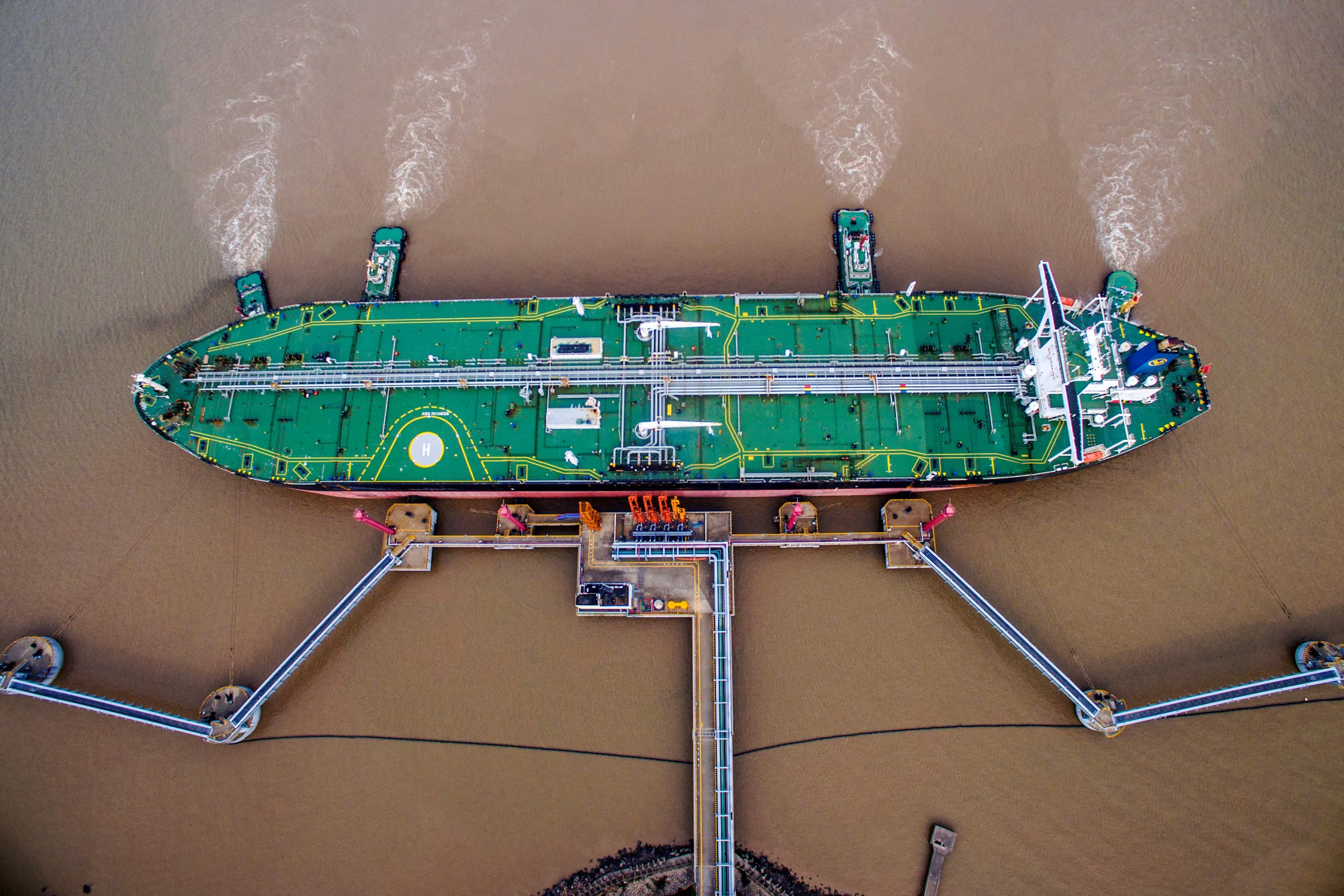
The ongoing trade conflict between the United States and China has placed American farmers in an increasingly precarious position, especially those producing soybeans. As China continues to impose retaliatory tariffs on U.S. agricultural exports, farmers face collapsing demand, lower prices, and mounting uncertainty about who will buy their crops. The situation has sparked concerns about the long-term stability of the U.S. agricultural sector and the broader implications for global commodity markets.
Background: Trade Tensions Between the US and China
The trade war between the United States and China began in earnest in 2018 under former President Donald Trump. The U.S. administration introduced a series of tariffs on Chinese goods, citing unfair trade practices, intellectual property theft, and the need to reduce the trade deficit. China, in turn, retaliated with tariffs targeting U.S. products, including a wide range of agricultural commodities such as soybeans, pork, and corn.
Soybeans, a major U.S. export commodity, quickly became a primary target. China is the world’s largest importer of soybeans, and American farmers have historically depended on this market for a significant portion of their sales. Prior to the trade dispute, the U.S. shipped around 30 to 35 million metric tons of soybeans annually to China, accounting for roughly 60% of total U.S. soybean exports.
Impact on American Farmers
The sudden imposition of tariffs by China created immediate financial strain for U.S. soybean producers. Prices for soybeans plummeted as Chinese buyers reduced purchases or turned to alternative suppliers such as Brazil and Argentina. The market shock left many farmers with surplus inventories and unsold crops, forcing them to consider storage costs or selling at a loss.
Farmers also face increased uncertainty regarding planting decisions. The financial pressure from lost sales to China has caused some farmers to reduce soybean acreage in favor of crops less dependent on Chinese demand, such as corn or wheat. However, switching crops is not an instant solution; it requires adjustments in equipment, labor, and expertise, making it a long-term challenge for many producers.
Government Intervention and Support
To mitigate the impact of lost sales, the U.S. government introduced support measures, including the Market Facilitation Program (MFP), which provided direct payments to farmers affected by the trade war. These subsidies helped alleviate some financial pressure, but they did not fully compensate for lost revenue or market instability.
Furthermore, the timing and size of these payments often lagged behind market losses, leaving farmers struggling to cover operational costs, such as seed, fertilizer, and labor. Critics argue that while government assistance offers temporary relief, it does not address the underlying vulnerability of the agricultural sector to geopolitical disputes.
Global Market Shifts
China’s decision to impose tariffs on U.S. soybeans triggered a realignment of global soybean markets. Brazil, already a leading producer, rapidly increased exports to fill the gap left by the U.S., capturing market share and strengthening its position as China’s preferred supplier. Argentina and other South American producers also benefited from rising demand.
This shift has long-term implications for U.S. competitiveness. Even if the trade dispute eventually resolves, it may take years for American farmers to regain lost market share. Relationships between buyers and sellers in global markets are built over time, and China has already solidified new supply chains with South American producers.
Regional Effects in the United States
The impact of the trade war is felt most acutely in major soybean-producing states such as Iowa, Illinois, Minnesota, and Indiana. Farmers in these regions report lower income, tighter margins, and increased debt levels. The economic stress also affects rural communities dependent on agriculture, including local businesses, equipment suppliers, and transportation services.
Farmers face additional logistical challenges. With reduced exports to China, they must find alternative buyers domestically or internationally, often at lower prices. Some are forced to store excess crops, incurring additional costs and reducing liquidity for the next planting season.
Alternative Markets and Diversification
To reduce reliance on China, U.S. farmers and exporters are exploring alternative markets. Countries in Southeast Asia, the European Union, and Mexico have increased imports of U.S. soybeans, but demand is generally insufficient to offset the lost Chinese market fully.
Diversification also requires changes in marketing strategies and supply chains. Farmers and cooperatives must establish new contracts, navigate trade regulations, and compete with established suppliers in these markets. This process can be slow and costly, highlighting the structural challenges in reducing dependency on a single buyer.
Technological and Crop Innovations
Some producers are exploring technological solutions to enhance competitiveness. These include developing higher-yield soybean varieties, improving pest and disease resistance, and adopting precision agriculture techniques to reduce costs.
Crop diversification strategies are also gaining attention. Farmers may rotate soybeans with other crops like corn, wheat, or specialty crops to reduce risk and stabilize income streams. However, such changes require careful planning and investment in new farming practices, which can be challenging in a climate of economic uncertainty.
Political and Diplomatic Considerations
The plight of U.S. farmers has become a significant political issue. Lawmakers from agricultural states have urged the administration to negotiate trade agreements that restore access to China’s market. Trade policies and tariffs are now central issues in political debates, particularly in rural regions where farming constitutes a major portion of the local economy.
Diplomatic negotiations are ongoing, with partial agreements reached on certain sectors, but broader resolution remains elusive. The future of U.S.-China agricultural trade depends on complex negotiations involving tariffs, intellectual property, technology transfer, and market access.
Lessons for the Agricultural Sector
The trade war underscores the vulnerability of American agriculture to geopolitical conflicts. Farmers dependent on a single export market face significant risks if international relations deteriorate. The situation highlights the need for:
- Market Diversification: Reducing reliance on a single buyer or region.
- Supply Chain Flexibility: Building robust distribution networks to adapt to sudden disruptions.
- Technological Innovation: Enhancing crop yields, quality, and resilience.
- Policy Support: Ensuring timely government assistance and trade advocacy.
These strategies are critical to building long-term resilience in an increasingly volatile global trade environment.
Conclusion
The ongoing U.S.-China trade war has created a perfect storm for American soybean farmers. With tariffs limiting access to China’s massive market, farmers face falling prices, surplus inventories, and growing uncertainty about who will purchase their crops. While government support and alternative markets offer partial relief, the structural challenges remain significant.
Long-term solutions will require market diversification, technological innovation, and strong trade negotiations to restore stability. The future of U.S. soybean farming hinges not only on the outcome of the trade war but also on the industry’s ability to adapt to an unpredictable global trading environment.
As the world watches, American farmers continue to navigate a complex landscape where international politics and market dynamics intersect, reminding everyone that the consequences of trade disputes extend far beyond borders, affecting livelihoods, communities, and the global food supply.