China Expands Export Controls on Rare Earths and Technology
China has introduced new export controls on rare earth elements and related technologies. Consequently, its leverage in global trade and geopolitical negotiations has increased. The Ministry of Commerce announced the measures on October 9, 2025, just before a high-profile summit between President Donald Trump and Chinese President Xi Jinping. Experts say the timing signals a calculated move to strengthen China’s bargaining position in global economic and security matters.
Strategic Context and Objectives
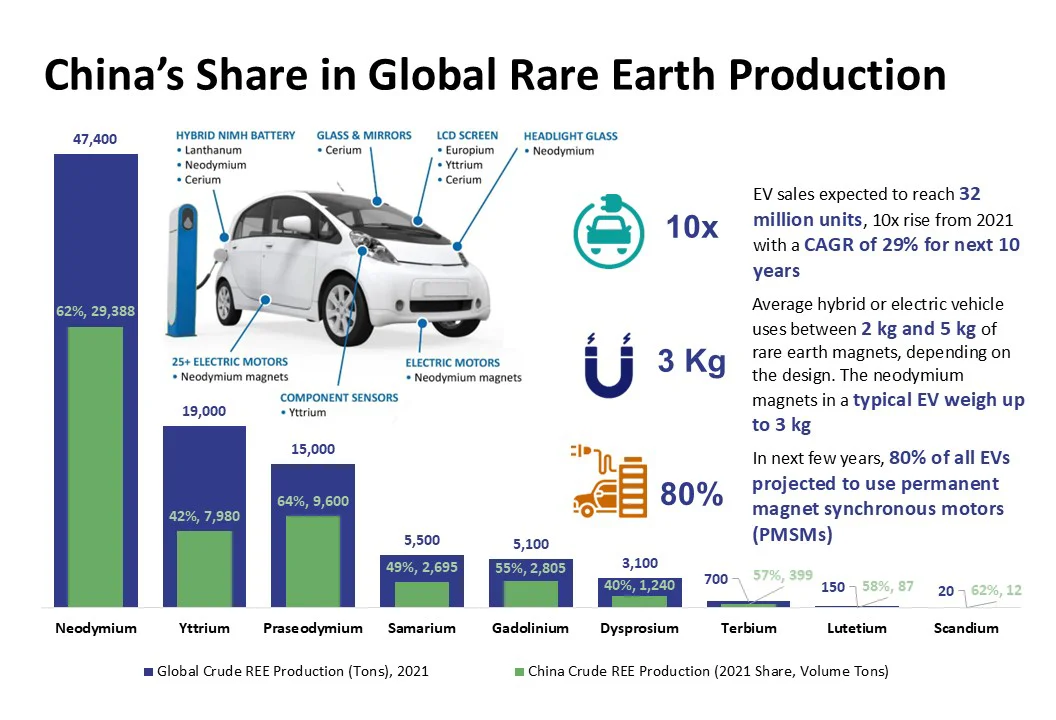
China dominates the rare earth sector. It controls approximately 70% of global mining, 90% of processing, and 93% of magnet manufacturing. These materials are critical for semiconductors, electric vehicles, wind turbines, and advanced defense systems. Therefore, the new export controls are framed as national security measures. They are intended to prevent unauthorized foreign military use of Chinese rare earths and related technologies.
Moreover, the timing coincides with heightened U.S.-China tensions. Analysts suggest Beijing is leveraging its market dominance to bolster its position in trade negotiations. Some experts describe this as economic coercion. By controlling access to these critical materials, China can influence international policy and strategic decision-making.
Rare earths, often called the “vitamins of technology,” are crucial for modern electronics. For instance, neodymium and dysprosium are key components in powerful magnets used in wind turbines, electric vehicles, and precision-guided weapons systems. Any disruption in supply could affect industries worldwide.
Key Provisions of the New Export Controls
The regulations, effective December 1, 2025, include several important measures:
- Export Licenses for Trace Amounts: Foreign companies must obtain special permits for even minimal exports of Chinese rare earths. This applies to raw materials and finished products alike.
- Technology Export Restrictions: Permits are required to export technology related to mining, smelting, recycling, and magnet production.
- Military Applications Denied: Applications for military use will generally be rejected. Technology and services for mining or processing rare earths cannot be provided without permission.
- Overseas Oversight: Controls apply to goods made with Chinese rare-earth materials or technology, even if manufactured abroad. Export licenses are required for these items.
- Collaboration Restrictions: Chinese firms cannot collaborate with foreign companies on rare earths without prior approval. Foreign users of Chinese-made components must also apply for licenses to export controlled items.
These measures are broader than previous rules. They extend oversight beyond China’s borders, reflecting Beijing’s concern that its technologies could be indirectly used for military purposes.
Global Reactions and Implications
The European Union has expressed strong disapproval of China’s actions. In July 2025, the European Parliament passed a motion condemning the restrictions. The motion criticized China’s “quasi-monopolistic position” in supplying rare earths and urged Beijing to remove the controls. It also encouraged the EU to invest in domestic mining and processing of critical minerals to reduce reliance on Chinese supply.
Meanwhile, India has agreed to export rare earth magnets to China under strict conditions. The magnets cannot be re-exported to the United States. Indian firms issued end-user certificates to confirm the materials will remain in India and will not be used to manufacture weapons of mass destruction.
These developments underscore global concerns over China’s dominance in critical materials. Countries are increasingly seeking alternative sources of rare earths. As a result, governments and private companies are exploring mining projects in Australia, Canada, and Africa. Some are investing in recycling technologies to recover rare earths from electronic waste. These initiatives aim to reduce dependency on Chinese supply and stabilize global markets.
Market Reactions and Economic Impact
The announcement of stricter export controls has already affected global markets. Shares of Chinese rare earth companies surged, reflecting expectations of tighter supply and higher prices. However, the broader economic implications are more complex. While domestic firms may benefit, international users face supply challenges. This could increase costs and cause disruptions in industries reliant on these materials, such as electronics manufacturing, automotive production, and renewable energy technologies.
The regulations also raise concerns about potential retaliation. The United States and its allies may accelerate domestic production of rare earths or establish alternative supply chains. For example, the U.S. Department of Defense has funded several domestic projects to produce critical rare earths for military and industrial use. Consequently, global trade dynamics may shift significantly, and countries may compete more aggressively for access to critical resources.
In addition, the new controls could affect pricing for consumer electronics, electric vehicles, and renewable energy systems. Industry analysts warn that extended restrictions may drive innovation in substitutes for rare earth-dependent components. Thus, the long-term market impact may include higher costs, increased recycling efforts, and accelerated research into alternative materials.
Strategic and Geopolitical Significance
Rare earth elements are not only economic assets but also geopolitical tools. By controlling supply, China can exert influence over global industries and national security strategies. The new export controls highlight Beijing’s ability to shape technology markets and secure strategic leverage.
Furthermore, the situation may accelerate international efforts to reduce reliance on a single dominant supplier. Countries may diversify sources, develop local production capabilities, and strengthen recycling initiatives. Over time, this could create a more resilient and competitive global rare earth market, though the transition will be challenging and costly.
Conclusion
China’s tightening of rare earth export controls marks a significant escalation in the use of economic leverage to influence global trade and security. Although immediate effects are visible in markets and diplomatic relations, the long-term impact will depend on how other nations respond.
Overall, this move underscores the strategic importance of rare earth elements and the complexities of modern international trade. It also demonstrates the intertwined nature of technology, defense, and global economics in a highly competitive geopolitical environment. Analysts predict that nations that act quickly to secure alternative sources and develop domestic capabilities will be best positioned to mitigate risks and maintain technological and industrial growth.