The Decline of Post-WW2 Multilateralism
Should we be surprised that 2026 didn’t even last one week before we saw the latest blow to post-WW2 multilateralism? After a brief festive pause following last year’s surge of unilateral tariffs, sanctions, and trade wars, we find ourselves heading into a period marked by unilateral military actions, forceful regime change, and increasingly disrespectful diplomacy.
In the wake of rising global tensions, frameworks traditionally swift to maintain their pre-eminence have shown nothing more than “concern,” while countries that usually champion moral high ground seem content to look away, perhaps fearing that they could be the next target. At this rate, the behavior we see on the world stage is akin to a schoolyard brawl, revealing the glaring inadequacies of an international system designed “of, by and for” one country and its former allies.
Read Also
China Tourism Performance in 2025
BYD Overtakes Tesla in Electric Vehicle Market
The Need for a New Global Governance Framework
The world desperately needs better than this. While discussions continue over the future of Venezuela’s oil and Greenland’s takeover, more pressing issues demand attention. Climate change is a force we cannot agree on containing, economic inequalities are deepening due to technological gaps, and armed conflicts are increasing globally. Meanwhile, challenges like nuclear proliferation, lagging SDG targets, financial scams, and economic instability continue to grow.
Amidst these challenges, global cooperation should be our focus. However, the recent actions by the U.S.—withdrawing from 66 global organizations, including those focused on climate, labor, and education—signal a shift toward unilateralism. Meanwhile, the U.S. military budget is set to increase by 50%. This suggests a troubling message: why foster cooperation when dominance can be imposed?
Reforming the United Nations for the 21st Century
The shortcomings of the current international system have led to the proliferation of alternative alliances and forums, many of which challenge the outdated UN model. The UN, designed 80 years ago, no longer fully meets the needs of the global community. The gap between its foundational principles and today’s realities is evident. The opening words of the UN Charter, “We the people,” now seem more aspirational than achievable.
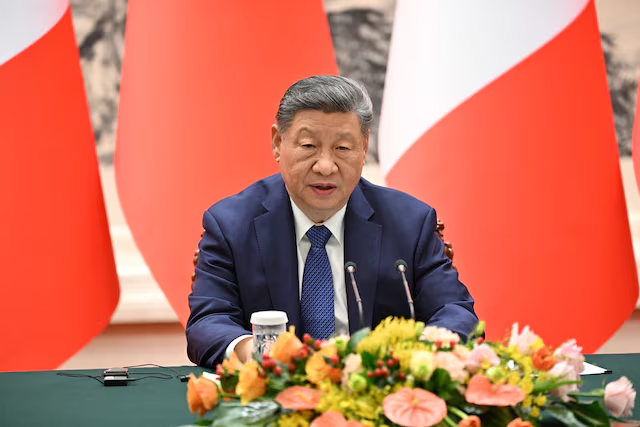
The world requires a robust, inclusive, and modern governance model that can ensure global stability and tackle the issues we face today. This is where the Global Governance Initiative (GGI), proposed by China at the 2025 SCO Summit, offers a promising framework.
Key Concepts of the Global Governance Initiative
The GGI is based on five core principles that could strengthen the United Nations and establish a more balanced global governance system:
- Sovereign Equality: All nations, regardless of size, strength, or wealth, must have their sovereignty and dignity respected.
- International Rule of Law: The rule of law must be applied equally and uniformly, ensuring fairness and justice in international relations.
- Multilateralism: Emphasis on multilateral cooperation through the UN, rather than unilateral actions or exclusionary practices.
- People-Centered Approach: Global governance should prioritize the common interests of all people, focusing on inclusive development and improving the lives of ordinary citizens.
- Real Actions for Sustainable Solutions: The GGI advocates for addressing both the root causes and symptoms of global issues to create lasting, sustainable solutions.
Why the Global Governance Initiative Matters
The GGI represents a comprehensive attempt to restore faith in the global governance framework. It seeks to create a system capable of addressing modern challenges, avoiding historical mistakes, and fostering unity in the face of crises.
At the heart of the GGI lies the desire to make the global system more responsive, accountable, and equitable, particularly in the context of deepening economic inequalities, environmental degradation, and geopolitical tensions.
Looking Ahead: The Role of the Global Governance Initiative
As we face challenges that demand global solutions, the GGI offers a pathway to meaningful change. It advocates for strengthening the United Nations and aligning it with 21st-century needs, ensuring that all nations have a voice in shaping the future. The framework emphasizes sustainable, cooperative actions that benefit everyone and contribute to a more stable world.
The world is evolving at an unprecedented pace. In the past 125 years, we’ve moved from transistor radios to AI and embodied intelligence. The innovations of today are paving the way for even more astounding advancements. But if we continue to pursue selfish, short-sighted goals at the cost of global stability, future generations will inherit a fragmented, unstable world.
In contrast, the Global Governance Initiative offers hope for a more balanced and sustainable future—one where nations collaborate for the common good, based on mutual respect and shared values. This is the future we must strive to build.